
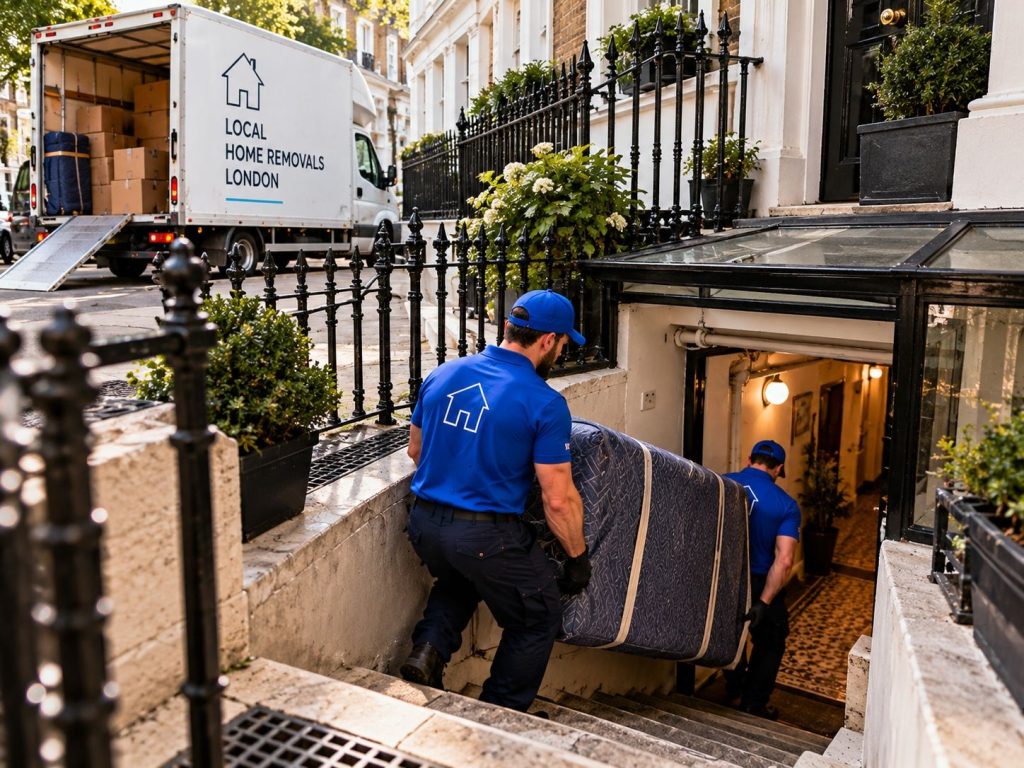
Basement Flat and Lightwell Moves: Tackling Steep Steps and Low Ceilings in Central London
Lower-ground and basement apartments form an essential part of Central London’s residential landscape. From white-stucco Georgian crescents in Pimlico and Belgravia to red-brick Victorian mansion terraces in Kensington and Chelsea, subterranean homes offer peaceful courtyards, secluded garden access, and historic charm.
However, moving in or out of a basement property presents some of the most difficult architectural access challenges anywhere in the UK capital. Rather than transferring belongings across level thresholds, moving crews must carry furniture down steep, external cast-iron or York stone steps, navigate narrow lightwells, and pass through subterranean damp-proof vault corridors. Combined with low ceiling clearances and tight doorway architraves, even standard furniture items can become serious access hazards.
Without disciplined spatial preparation and specialist lifting methods, moving through a basement lightwell risks damaging historic stonework, tearing modern damp-proof membrane linings, or suffering moving-day injuries.
Booking an experienced removal van in London alongside a specialist team in local home removals ensures that your lower-ground move is carried out safely, methodically, and with total respect for heritage architecture.
The Architectural Challenges of Central London Basement Flats
Subterranean homes built throughout the 18th and 19th centuries were originally designed for sculleries, coal cellars, and domestic staff quarters. Modern conversions have transformed these spaces into luxury homes, but the fundamental physical entryways remain historic:
- Steep, Narrow Cast-Iron and Stone Steps:
- Access from street level to the basement lightwell is typically via a steep, narrow flight of open-tread cast-iron stairs or slick stone steps.
- These staircases are often under 800 mm wide, making two-person side-by-side carrying impossible and requiring precise end-to-end carrying techniques.
- Confined Lightwells and Low Headroom:
- Lightwells function as natural light catchers, leaving minimal turning space at the bottom of the stairs.
- Overhead street walkways and cantilevered stone front porches create low-headroom pinch points where tall wardrobes, bed frames, and headboards easily scrape masonry.
- Subterranean Vaults and Damp-Proof Membranes:
- Many basement entrances pass through historic coal vaults converted into utility spaces or entrance hallways.
- These corridors feature modern retrofitted cavity drainage membranes (studded plastic sheets concealed behind plasterboard). Puncturing or gouging these wall linings with sharp table legs compromises damp proofing and can lead to expensive repair bills.
- Heavy Railing Gates and Tight Lightwell Turns:
- Historic black wrought-iron railings and narrow security gates severely limit the entry arc into the lightwell. Movers cannot turn long furniture items without carefully angling them over the railings.
Managing Kerbside Logistics in Kensington, Chelsea, and Pimlico
Operating a removal vehicle outside high-density Central London addresses requires strict adherence to borough parking rules:
- Strict Controlled Parking Zones (CPZs):
- The Royal Borough of Kensington and Chelsea (RBKC) and Westminster City Council enforce some of the strictest parking controls in the UK.
- Kerbside spaces outside basement flats are heavily reserved for residents, meaning an unsuspended vehicle risks an immediate Penalty Charge Notice (PCN) within minutes.
- Advanced Council Parking Bay Suspensions:
- Securing official parking suspensions requires at least 10 to 14 working days of notice in Westminster and RBKC.
- Reserving two standard bays directly outside the lightwell entrance minimizes the carrying distance across busy pavements and down the stairs.
- Hollow Vaults Beneath Pavements:
- Many Central London pavements conceal hollow cellars and coal vaults extending right up to the kerb edge.
- Positioning heavy commercial vehicles over historic vaults requires care; operating an agile 3.5-tonne Luton van prevents excessive axle load on delicate subterranean structures.
Specialist Equipment for Low-Ground and Lightwell Moves
Professional basement moving teams use specialist gear to handle steep steps safely without risking injury or property damage:
- Ergonomic Shoulder and Forearm Lifting Straps:
- Narrow cast-iron steps leave no room for movers to hold the sides of heavy appliances.
- Heavy-duty lifting harnesses allow the top and bottom movers to bear the weight through their core and legs while keeping their hands free to balance items around tight brick corners.
- Padded Banister and Railing Guards:
- Wrought-iron railings along lightwells can scratch furniture and scuff historic paint.
- Thick, quilted railing drapes are laced over the railings before work begins, protecting both the ironwork and delicate upholstery.
- Slip-Resistant Tread Runners:
- External stone steps in Kensington and Pimlico collect moss, rain, and street grime, making them treacherous during wet London mornings.
- Laying high-traction rubber stair mats prevents slips and ensures sure footing under load.
- Protective Corner Protectors for Low Bulkheads:
- Foam impact guards fitted to low stone architraves and brick bulkheads prevent scuffs when carrying long items down into the lightwell.
Strategic Furniture Dismantling for Low Ceilings and Narrow Doors
Because basement flats feature lower ceilings and narrower doors than upper-level floors, careful furniture preparation is vital:
- Complete Furniture Disassembly:
- Expert packers and movers disassemble modular wardrobes, bed frames, dining table legs, and shelving units down to their flat panels.
- Dismantling furniture in advance allows components to pass cleanly through tight vault corridors without scraping walls.
- Angled Tilting Techniques for Sofas:
- Deep three-seater sofas cannot be carried horizontally through basement doors.
- Crews stand sofas vertically on their end, pivoting them through the doorway in an “L-shaped” sweep to clear low ceilings and tight door frames.
- Removing Door Hinges for Critical Clearances:
- Where an entrance door opens inward and reduces the usable opening by 40 to 50 mm, professional movers carefully remove the door from its hinges to gain that essential clearance.
The Value of Flexible Interim Storage During Basement Renovations
Basement conversions across Central London are frequently subject to ongoing waterproofing checks, timber treatment, or interior repainting:
- Holding Belongings Safely Off-Site:
- If floor laying, damp proofing, or paint drying overlaps with your completion day, transferring furniture into secure containerised storage units keeps items safe and clean.
- Phased Move-In Scheduling:
- Staging deliveries allows you to unpack basement living areas one room at a time, avoiding corridor clutter in homes with limited floor space.
- Protecting Fragile Furnishings from Moisture:
- Clean, dry, climate-stable storage containers safeguard sensitive timber and fabrics while damp-proofing works finish curing.
Basement Flat Moving Checklist
- [ ] Measure the width and angle of the external steps, gate opening, and lightwell turning radius.
- [ ] Check ceiling heights and doorway widths along all basement corridors and vault entrances.
- [ ] Book council parking bay suspensions with Westminster or RBKC at least 14 working days ahead.
- [ ] Notify your moving team that the property is a basement flat with steep external steps.
- [ ] Lay non-slip rubber runners on exterior steps and install padding on wrought-iron railings.
- [ ] Disassemble all large bed frames, wardrobes, and modular furniture prior to move day.
How Removal Squad Conquers Central London Basement Moves
At Removal Squad, we have extensive experience managing the unique architectural demands of London’s lower-ground and basement properties. From narrow lightwells in Pimlico to historic vaults in Kensington and Chelsea, our trained crews handle every step with precision and care.
Our dedicated basement moving solutions include:
- Agile London Removal Vans: Clean, modern, ULEZ-compliant Luton vans equipped with hydraulic tail lifts and specialized surface protection gear.
- Specialist Local Home Removals: Fully managed residential relocations designed for basement flats, period conversions, and garden apartments.
- Responsive Man and Van Removals: Flexible moving options perfect for compact studio basements, partial loads, and marketplace collections.
- Professional Packers and Movers: Complete packing, dismantling, and reassembly services to guide oversized furniture safely through narrow access ways.
- Secure Interim Storage Units: Safe, dry container storage facilities available on flexible weekly terms to support phased property moves.
Relocate to Your Basement Flat with Total Peace of Mind
Moving into a lower-ground London home does not have to mean damaged paintwork, broken furniture, or moving-day stress. By checking your entry dimensions early, protecting steps and railings, and partnering with an experienced removal team that knows Central London architecture, you ensure your belongings arrive safely and smoothly.
Planning an upcoming basement flat move in Kensington, Chelsea, or Pimlico? Contact Removal Squad today to book your detailed access survey and receive a transparent, competitive quote.
Credit: Royal Borough of Kensington and Chelsea (RBKC) Parking Operations & Westminster City Council Street Management Guidelines