
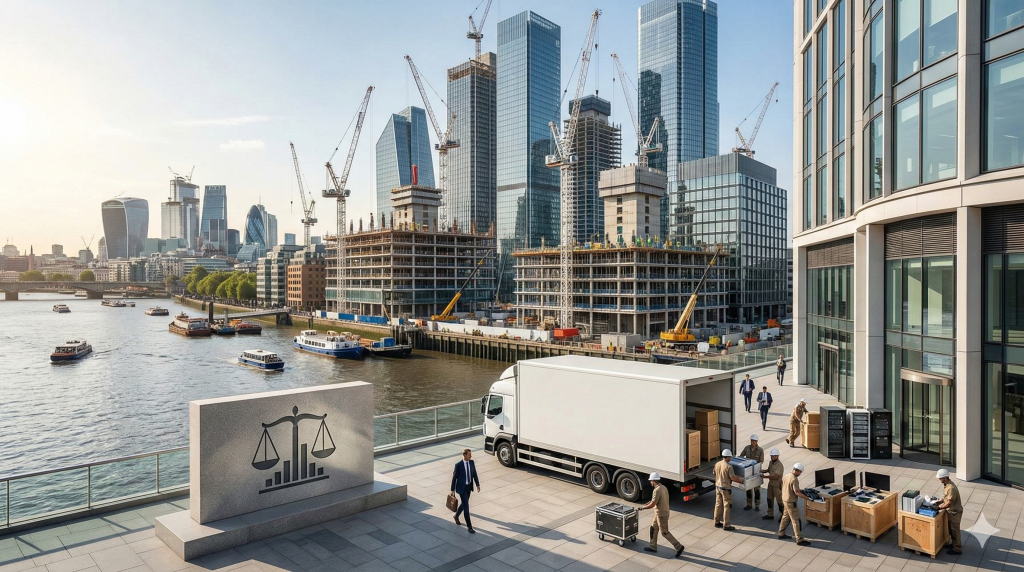
The momentum behind Southbank office space developments is increasingly being shaped by large institutional investors deploying long-term capital into Central London’s commercial core. Over the past year, significant refinancing activity and real estate debt deployment have signalled confidence in the riverside district stretching from Waterloo to London Bridge.
Recent announcements from major investors including Legal & General highlight how strategic funding continues to underpin regeneration at schemes such as Southbank Place. These transactions are not merely financial restructurings; they often mark the beginning of repositioning, refurbishment and tenant reshuffling phases that shape how businesses operate in the area.
Why Institutional Capital Matters for Southbank Office Space Developments
Institutional investors bring patient capital, long investment horizons and ESG-driven performance requirements. When refinancing or debt deployment occurs, it often precedes:
- Asset upgrades and sustainability improvements
- Reconfigured floorplates for hybrid occupiers
- Enhanced shared amenities
- Lease restructures and tenant transitions
The Southbank’s proximity to Waterloo Station and connectivity across Central London make it particularly attractive for occupiers seeking accessibility combined with modern workspace standards.
As vacancy rates fluctuate across the wider City of London and Midtown submarkets, Southbank continues to position itself as a mixed-use alternative offering cultural vibrancy alongside Grade A commercial space.
Institutional investment therefore doesn’t just support buildings, it influences movement within the ecosystem of businesses operating along the Thames corridor.
Market Dynamics Along the Thames Corridor
Several structural forces are reinforcing activity in the district:
1. ESG Compliance and Retrofitting
Institutional owners increasingly prioritise carbon reduction and operational efficiency, leading to refurbishments that temporarily displace tenants during upgrade cycles.
2. Hybrid Workspace Reconfiguration
Post-pandemic workspace strategies continue to evolve. Floorplates are being redesigned to accommodate collaboration-heavy layouts rather than traditional desk density models.
3. Lease Expiry Clustering
In regeneration zones, multiple leases often expire within close cycles, leading to coordinated transitions across neighbouring schemes.
4. Mixed-Use Integration
With retail, residential and leisure integrated into developments such as Southbank Place, commercial occupiers benefit from destination-driven footfall and enhanced staff retention appeal.
Operational Impact of Institutional Investment Activity
While capital deployment makes headlines, its operational implications are equally significant.
When assets are refinanced or repositioned, businesses may experience:
- Phased relocation schedules
- Temporary decanting during refurbishment
- Short-term holding solutions for furniture and equipment
- Structured building clearances ahead of fit-out works
This movement is not always visible in headline property reporting, but it forms a consistent undercurrent in active regeneration districts.
Southbank’s density and traffic management considerations also mean that coordinated logistics planning is essential, particularly where loading bays and timed access windows are involved.
Removal Squad Services in Southbank & Central London
As institutional investment continues to reshape the riverside market, businesses often require practical transition support. Removal Squad operates across SE1 and wider Central London, providing:
Business relocation services – Strategically managed workplace transfers designed to keep operations running smoothly during changeovers.
London fleet-based moving vehicles – Coordinated transport coverage across Central London areas with route-planned efficiency.
Scaled workspace moving assistance – Adaptable support for department-by-department shifts or compact office transitions.
Specialist packing for corporate assets – Protective handling of confidential records, IT systems and delicate business equipment.
Secure interim storage facilities – Monitored spaces available for short or mid-term holding during refurbishments or lease gaps.
Corporate clearance and asset disposal – Organised removal of surplus desks, fixtures and outdated office materials.
The Outlook for 2026 and Beyond
The trajectory for Southbank office space developments remains closely tied to institutional confidence and macroeconomic conditions. Continued refinancing activity suggests that long-term investors view the district as resilient and strategically positioned within London’s commercial geography.
With strong transport links, cultural proximity to the South Bank arts quarter, and expanding mixed-use integration, the area is likely to see further cycles of refurbishment, tenant transition and workspace optimisation.
In the broader context of London regeneration, Southbank stands as a case study in how capital markets quietly influence the day-to-day movement of businesses across the city.
Credit: L&G