
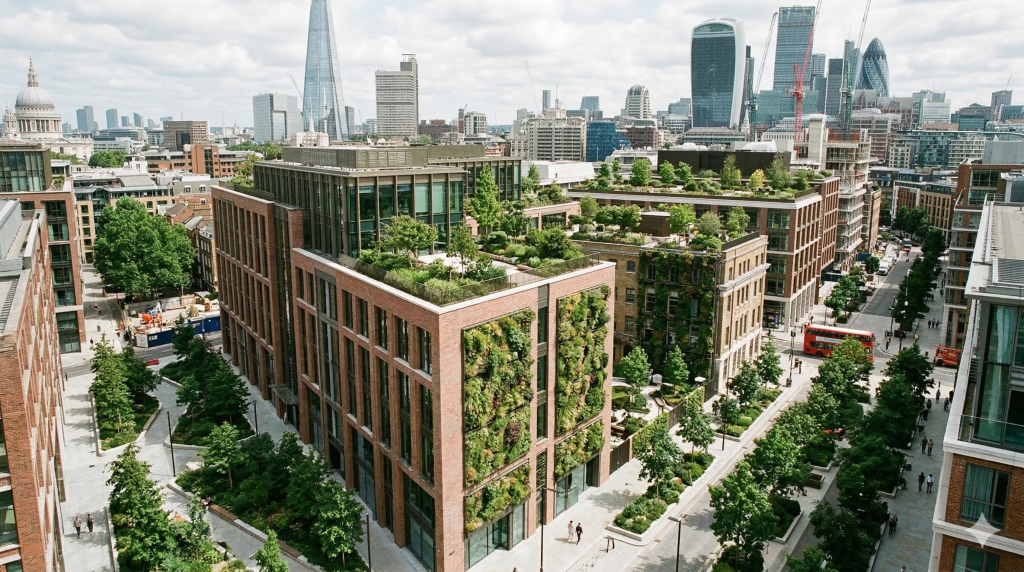
The built environment plays a critical role in shaping ecological outcomes across the UK. From urban regeneration schemes in London to infrastructure developments nationwide, the way projects are designed and delivered directly impacts biodiversity, habitats and long-term environmental resilience.
The recently launched UKGBC nature positive framework by the UK Green Building Council provides structured guidance to help organisations move beyond mitigation and towards measurable ecological restoration.
As planning policies evolve and sustainability expectations grow across London boroughs and UK regions, embedding biodiversity into every stage of a project lifecycle is no longer optional; it is strategic.
Why Biodiversity Must Be Embedded, Not Added Later
Historically, biodiversity considerations were often treated as a compliance exercise. Today, with increasing regulatory focus and investor scrutiny, ecological performance is becoming central to development value.
The UK construction and real estate sectors significantly influence land use, supply chains and natural ecosystems. According to global biodiversity goals outlined under the Convention on Biological Diversity, reversing nature loss requires systemic transformation across industries.
In practical terms, this means:
- Designing with habitat protection in mind from concept stage
- Avoiding ecological harm before attempting compensation
- Measuring biodiversity outcomes with credible metrics
- Aligning projects with national and local planning requirements
For developers operating in London, Manchester, Birmingham and other growing urban centres, this shift is already influencing planning approvals and investment decisions.
How the UKGBC Nature Positive Framework Supports Project Integration
The UKGBC nature positive framework provides a structured pathway for organisations to embed ecological thinking across the entire asset lifecycle.
Rather than focusing solely on site-level offsets, the framework encourages action across:
1. Organisational Strategy
Companies are encouraged to set biodiversity goals aligned with global targets and integrate them into governance and reporting structures.
2. Site Selection and Design
Avoidance of high-risk ecological areas and incorporation of green infrastructure, native planting and habitat connectivity.
3. Construction Phase
Reducing on-site disturbance, managing supply chain impacts and monitoring environmental performance.
4. Operations and Long-Term Management
Ensuring biodiversity gains are maintained, monitored and enhanced over time.
Aligning Biodiversity with Urban Development in London
London presents a unique context. Dense development, brownfield regeneration and housing demand require innovative solutions to integrate nature into constrained spaces.
Approaches increasingly seen across Greater London include:
- Living roofs and vertical planting systems
- Urban tree canopy expansion
- Biodiverse public realm spaces
- Sustainable drainage systems (SuDS)
- Habitat corridors connecting fragmented green spaces
By aligning project planning with structured guidance, developers can demonstrate measurable biodiversity net gains; an area of increasing scrutiny in UK planning frameworks.
Embedding ecological performance early in design not only reduces compliance risk but also strengthens long-term asset resilience and community value.
The Business Case for Nature-Positive Delivery
Beyond environmental responsibility, integrating biodiversity can:
- Improve planning approval success
- Enhance ESG reporting credibility
- Reduce reputational risk
- Attract sustainability-focused investors
- Strengthen tenant and community engagement
In competitive urban markets such as London, projects that demonstrate environmental leadership often secure stronger stakeholder support.
Supporting Sustainable Transitions in the Built Environment
As urban development evolves, sustainable logistics and operational efficiency also contribute to responsible project delivery. Whether relocating offices, managing site transitions or supporting property handovers, service providers play a role in enabling smooth project movement.
Removal Squad Services in London
House moving services – Organised and dependable support for residential relocations throughout London and surrounding areas.
London moving van service – Well-equipped vehicles designed for smooth urban transport and scheduled property moves.
Man with a van hire – Practical assistance for compact moves, apartment transfers and light-load relocations.
Expert packing solutions – Protective wrapping, careful boxing and methodical handling of household belongings.
Furniture transport service – Reliable collection and delivery for home and office furnishings of all sizes.
Same day courier London – Prompt collection and delivery for urgent items within the capital and nearby districts.
Flexible storage units – Secure facilities available for temporary holding during staged or delayed moves.
Property clearance services – Efficient removal of unwanted goods, fixtures and general contents from residential or commercial premises.
Driving Future-Ready, Nature-Positive Development in London
The shift toward measurable biodiversity outcomes is accelerating across the UK built environment sector. Structured guidance such as the UKGBC framework helps bridge the gap between sustainability ambition and practical implementation.
For London developers, planners and property stakeholders, embedding biodiversity across projects is becoming a defining feature of future-ready development.Planning a move in London?Removal Squad delivers reliable, efficient relocation support tailored to your needs. Contact us today for professional moving, storage, and delivery services across Greater London.
Credit UKGBC