
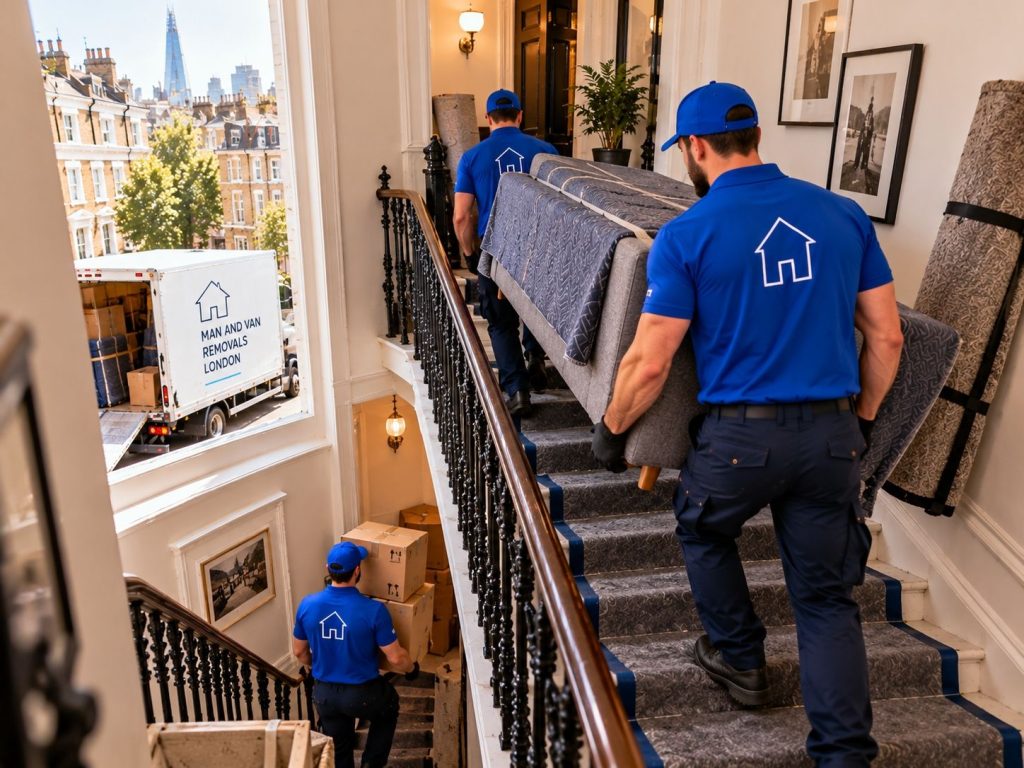
Top-Floor Tenement and Attic Flat Relocations: How to Handle Complex Multi-Storey Walk-Ups
Attic conversions and top-floor Victorian flats offer some of London’s most sought-after residential living spaces, boasting panoramic skyline views, vaulted ceilings, and an abundance of natural light. From period mansion blocks across Maida Vale and Battersea to converted terraced houses in Hackney, Clapham, and Finsbury Park, these elevated properties are a staple of the capital’s housing landscape.
However, carrying your life up or down three, four, or five flights of stairs without a passenger lift is one of the most physically punishing relocation challenges in urban moving. Narrow communal landings, winding spiral stairs, low ceiling bulkheads, and long flights can quickly exhaust casual movers. Attempting a multi-storey walk-up move without structured preparation leads to scratched communal paintwork, broken furniture, personal injury, and severe move-day delays.
Booking an experienced provider of man and van removals London with a dedicated moving van in London turns a daunting vertical climb into a controlled, methodical, and damage-free operation.
The Physical Realities of Multi-Storey Walk-Up Moves
Relocating across multiple flights of stairs introduces mechanical hurdles that standard ground-floor moves never present:
- Stair Fatigue and Crew Stamina Degradation:
- An average two-bedroom flat contains approximately 35 to 50 packed boxes, alongside bed frames, wardrobes, white goods, and sofas.
- Moving this payload down four flights of stairs equates to carrying several metric tonnes over hundreds of vertical steps. Unprepared movers fatigue rapidly after the first hour, drastically increasing the likelihood of dropped cartons or slip injuries.
- Tight Victorian Spiral Stairs and Half-Landings:
- Period conversion staircases often feature narrow 90-degree or 180-degree winders with restricted turning space.
- Manoeuvring bulky items—such as three-seater sofas or king-size divan bases—around these tight corners requires precise spatial pivoting rather than brute force.
- Low Ceiling Heights and Sloping Attic Walls:
- Top-floor and eaves conversions frequently feature low ceiling clearances, exposed beams, and angled plaster walls.
- Carrying long items vertically without spotting can puncture lath-and-plaster walls, tear wallpaper, or smash pendant light fixtures.
- Communal Hallway Liability and Freeholder Rules:
- In shared conversion buildings, freeholders and neighbours take scuffed communal walls, chipped banisters, or damaged fire doors very seriously.
- Damage caused during a move can lead to direct repair bills or deductions from your rental deposit.
Strategic Weight Distribution: Box Packing Rules for Walk-Up Flats
The secret to conquering steep multi-storey staircases starts with disciplined box packing. When moving items down flights of stairs, box weight matters far more than box size:
- The 15 kg Golden Rule:
- Keep maximum box weight strictly under 15 kg for walk-up properties.
- It is far safer, faster, and less fatiguing to carry two lighter boxes smoothly than to struggle with one overloaded 30 kg carton that throws a mover off balance on a steep step.
- Distributing Heavy Items Across Small Cartons:
- Pack heavy items such as books, vinyl records, cast-iron cookware, and canned goods exclusively into small, double-walled book boxes.
- Never fill large utility boxes with heavy media; reserve large cartons solely for lightweight, bulky items like duvets, pillows, and winter coats.
- Reinforced Box Bottoms:
- Apply heavy-duty cross-taped seams (the “H-tape” method) across carton bases.
- Sudden vertical jolts on stairs can cause weak tape to fail, leading to box blowouts that drop breakables down the staircase.
- Clear Colour-Coded Labelling:
- Clearly label boxes with destination room markers and “Heavy” warning tags on the sides rather than the tops, allowing team members on the stairs to identify heavy loads instantly.
The Human Relay: How Professional Movers Manage Stair Logistics
Professional moving teams do not carry every single item from the fourth floor down to the kerb in one continuous trek. Instead, they implement structured relay systems:
- The Staged Relay Method:
- One team member works inside the top-floor flat, staging items onto the top landing.
- A second mover carries items down two flights to an intermediate half-landing.
- A third mover transports goods from the lower landing directly onto the hydraulic tail lift of the vehicle.
- This staging strategy prevents muscle fatigue, reduces turnaround time, and keeps movements orderly.
- Using Heavy-Duty Lifting Straps and Forearm Forklifts:
- Carrying washing machines, solid timber desks, or large chest of drawers down narrow stairwells using bare hands puts extreme strain on finger grips and lower backs.
- Professional crews use ergonomic shoulder and forearm lifting harnesses to leverage core leg strength, keeping hands free to stabilise furniture around tight corners.
- Tracked Stair-Climbing Equipment:
- For unusually heavy assets such as American fridge-freezers or heavy steel filing cabinets, crews deploy specialist tracked stair dollies that glide step-by-step without impacting stair treads.
Protecting Communal Areas and Minimising Neighbour Friction
Navigating shared conversion hallways requires respect for communal infrastructure and neighbouring residents:
- Padded Banister and Railing Sleeves:
- Wrapping ornate timber handrails and cast-iron banisters in thick quilted transit sleeves prevents deep gouges caused by sofa legs and appliance corners.
- High-Tension Door Architrave Protectors:
- Fitting spring-loaded foam corner guards along narrow doorway entrances protects decorative timber architraves from repeated knocks.
- Breathable Floor Runners on Shared Carpeting:
- Laying self-adhesive carpet protection runners across communal stairs prevents tracking mud, rain, and street grit into shared carpets.
- Managing Communal Fire Doors and Escape Routes:
- Never wedge open heavy fire doors unattended.
- Stationing team members along the flight ensures that fire doors are held open only while active carrying is underway, keeping building fire safety protocols intact.
Why Flexible Man and Van Removals London Outperform Heavy HGVs for Flats
Choosing an agile vehicle format is critical when dealing with high-density London conversion properties:
- Kerbside Proximity Minimises Carrying Distance:
- After carrying furniture down four flights of stairs, the last thing your team needs is a 60-metre walk to an oversized lorry parked down the road.
- Compact 3.5-tonne Luton vans fit into tight residential bays, parking directly outside the front entrance door.
- Hydraulic Tail Lifts Reduce Ground Strain:
- Vehicles equipped with 500 kg tail lifts allow crews to set items down smoothly at pavement height without awkward, heavy lifting into high truck beds.
- Full ULEZ and Clean-Air Compliance:
- Modern, Euro 6 compliant commercial vehicles move effortlessly through all London boroughs, eliminating unexpected clean-air penalty notices.
- Flexible Interim Storage Support:
- If your top-floor tenancy ends before your next lease begins, moving non-essential items into secure containerised storage units reduces the volume you have to carry on moving day.
Top-Floor Walk-Up Moving Checklist
- [ ] Count the exact number of steps, flights, and half-landings from your front door to the street.
- [ ] Measure the narrowest points of the staircase, low ceiling overhangs, and door frames.
- [ ] Inform your removal company in advance that your property is a multi-storey walk-up to ensure adequate crew numbers.
- [ ] Keep box weights under 15 kg and pack heavy books into small, reinforced cartons.
- [ ] Disassemble large bed frames, modular wardrobes, and dining tables completely before crew arrival.
- [ ] Notify building neighbours of move times to minimise shared staircase disruption.
- [ ] Lay non-slip protective floor runners on communal stairs and landings.
How Removal Squad Conquers London’s Most Demanding Walk-Up Moves
At Removal Squad, our teams are fully trained and equipped to manage London’s most challenging vertical relocations. We understand the physical and logistical demands of top-floor flats, mansion conversions, and attic walk-ups, delivering careful, efficient service from top landing to street level.
Our tailored walk-up moving services include:
- Agile Man and Van Removals London: Highly responsive, multi-crew moving teams equipped with lifting harnesses, dollies, and stair equipment.
- Dedicated Moving Vans: Clean, modern, fully insured, ULEZ-compliant Luton vans fitted with hydraulic tail lifts and padded transit blankets.
- Specialist Packers and Movers: Professional packing teams who systematically box, label, and disassemble furniture to streamline staircase transport.
- Comprehensive Home Removals: Full residential relocation packages managed by experienced crews who prioritise building and property protection.
- Secure Interim Storage Units: Safe, dry container storage facilities available on flexible weekly terms to support phased flat moves.
Move Up or Down with Total Confidence
Relocating from a top-floor flat or attic walk-up does not have to leave you exhausted or facing expensive communal repair deductions. By capping box weights, planning staircase paths, and partnering with an experienced, fully insured moving team, you can conquer any London walk-up safely and efficiently.
Facing a multi-storey move in London? Contact Removal Squad today to book your free survey and receive a clear, competitive quotation tailored to your property.
Credit: Health and Safety Executive (HSE) Manual Handling Guidelines & British Association of Removers (BAR) Residential Standards