
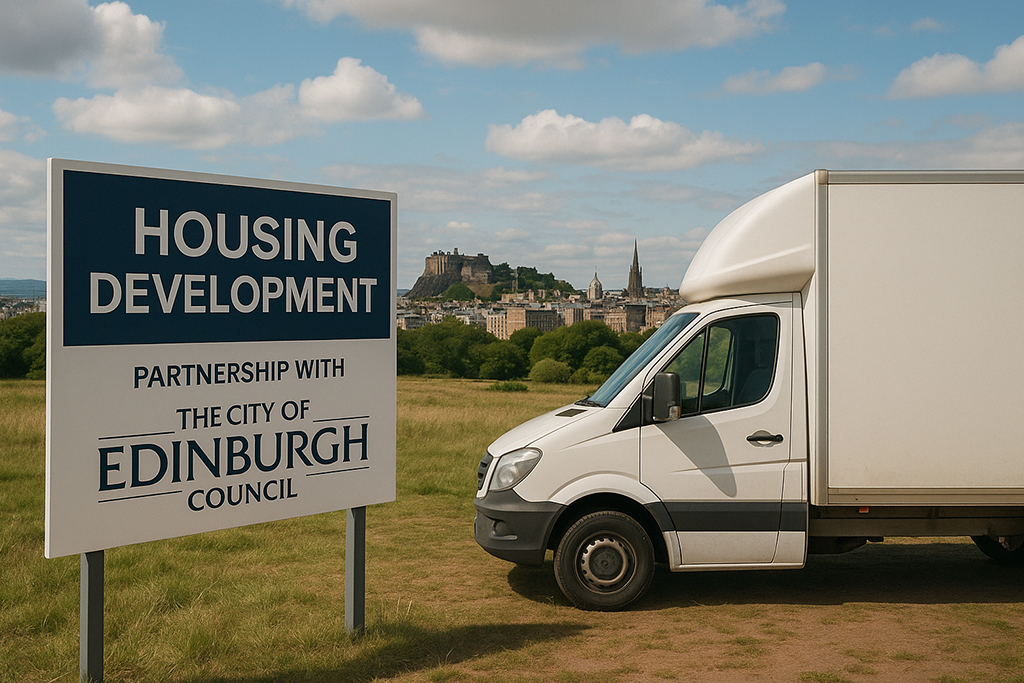
When the City of Edinburgh Council and Cruden Group secured £42 million in government funding to deliver 847 new homes at Granton Waterfront, it wasn’t just another line in Scotland’s regeneration record. It marked a deeper shift; one where housing, sustainability, and urban mobility increasingly intersect.
This project, part of the £1.3 billion Granton Waterfront Regeneration Vision, represents one of the UK’s largest coastal renewals. It signals how development policy is being shaped not only by housing demand, but by how people and infrastructure move, adapt and interact within the city environment.
The Broader Context: Regeneration as a Reflection of Urban Movement
Urban regeneration extends beyond replacing outdated housing or redrawing city boundaries; it now redefines the way communities live and move.
In Granton, 847 homes will emerge on a 60-hectare stretch of Edinburgh’s coastline, a location once characterised by industry, now reimagined as a sustainable, inclusive waterfront. These homes will be net-zero ready, aligning with Scotland’s 2045 carbon goals, and embedded in a mixed-use landscape of parks, public art, education facilities, and digital infrastructure.
Such developments do more than accommodate population growth; they shape the way people transition through cities; from how they commute and store to how they furnish, connect, and interact. Movement becomes both a physical and cultural indicator of modern living.
A Shift in Urban Rhythms
Every regeneration project redefines the rhythm of a city. In Edinburgh’s case, Granton Waterfront will rebalance the relationship between housing and connectivity; making once-peripheral districts integral to daily life.
It’s a long-term vision, but its implications are immediate:
- Integrated mobility – with better links to the city centre, cycle routes, and electric transport options.
- Smarter design – homes and facilities conceived around accessibility, sustainability and digital living.
- Local ecosystems – where residential, commercial, and leisure spaces co-exist, reducing dependency on long commutes.
The ripple effect is profound. As cities like Edinburgh expand sustainably, they generate new patterns of circulation; not just of people, but of goods, materials, and the services that keep communities functional.
Beyond Bricks and Mortar: What the £42 m Investment Signifies
The £42 million funding represents more than capital; it reflects confidence in a city model that values flexibility, environmental balance and inclusive growth.
From a policy perspective, it strengthens three national objectives:
- Tackling the housing shortage with affordable, quality developments.
- Achieving net-zero living, using efficient construction and design principles.
- Stimulating regional economies, by creating sustainable neighbourhoods that support local enterprise.
From a cultural standpoint, it also reframes how citizens perceive progress. Modern regeneration isn’t about displacement; it’s about renewal and connection. Each home becomes a node in a wider network of mobility and belonging.
Movement as an Urban Currency
The success of projects like Granton Waterfront will ultimately depend on how easily people and materials can flow through them. That extends from construction logistics and urban deliveries to daily routines and civic engagement.
Modern housing development is a choreography of movement; cranes, vehicles, trades, and technology converging in precise coordination. Once occupied, those same systems evolve into everyday circulation: commuting, shopping, recycling, and distribution.
This rhythm; constant and adaptive; defines the modern city. It’s what links regeneration to relocation, and construction to community.
Moving Van Services and the Ecosystem of Urban Support Services.
While regeneration headlines focus on architecture and investment, the support infrastructure beneath it is equally transformative.
Removal van services – reliable transport for structured residential or commercial moves.
Man and van removals – flexible, small-scale transport ideal for city environments.
Home removals – coordinated relocation connecting growing urban communities.
Packers and movers – expert packing and organisation for smooth transitions.
Furniture delivery service – efficient last-mile delivery for new homes and refurbishments.
Courier service – rapid urban distribution for goods and essentials.
Storage solutions – bridging short- and long-term space needs between moves.
Clearance services – sustainable management of waste and surplus materials.
Manpower services – skilled on-site assistance for logistics and handling tasks.
Motorbike delivery – agile transport option for compact or urgent deliveries.
eBay and store pickups – seamless transfer of retail or second-hand purchases across the city.
As cities grow denser and developments multiply, these services become part of the connective tissue that enables flexibility. They respond to how people live in compact homes, move between phases of occupancy, and engage in a fast-paced digital economy.
For example:
- Furniture and appliance logistics must align with sustainable transport zones and restricted access areas.
- Storage and clearance solutions help bridge delays between handovers, renovations, or short-term lets.
- On-demand courier and delivery networks support the convenience-driven lifestyle of new urban communities.
This ecosystem evolves quietly alongside regeneration projects like Granton — less visible than cranes and scaffolds, yet critical to the smooth operation of modern city life.
The Future of Sustainable Urban Movement
The Edinburgh announcement fits within a broader pattern across the UK: cities re-engineering themselves for balance between density and liveability.
From the King’s Cross transformation in London to Salford Quays in Manchester, regeneration now aims to connect housing growth with ecological resilience and digital readiness.
Key emerging priorities include:
- Decentralised urban design, where smaller hubs reduce traffic congestion and support local economies.
- Circular resource flows, with reuse, recycling, and reduced waste embedded in city planning.
- Micro-mobility infrastructure, accommodating e-bikes, small deliveries, and shared transport models.
These trends redefine what it means to “move” within a city. It’s not only people relocating homes; it’s materials being reused, goods circulating efficiently, and communities interacting through smarter systems.
Edinburgh as a Model for Modern Development
What makes the Granton Waterfront scheme notable isn’t just its financial scale, but its integrated philosophy. It’s a live example of how cities are moving from expansion to integration.
Housing isn’t viewed as an endpoint; it’s seen as an entry point to better lifestyles and economic inclusivity. Every element; from street layout to renewable energy; contributes to an environment that anticipates mobility rather than merely accommodates it.
The regeneration also reinforces a subtle but important truth: as cities evolve, so do the networks that sustain them. Behind the architecture lies a constant pulse of logistics, supply chains, and service ecosystems that reflect the complexity of urban growth.
Conclusion
The £42 million investment in Granton Waterfront represents far more than 847 homes. It symbolises the new direction of city life; one where regeneration, sustainability, and movement coexist.
Each phase of this development will reshape not only the Edinburgh skyline but also the unseen frameworks of logistics, accessibility, and adaptability that define modern urban environments.
As the UK continues to pursue large-scale housing projects, the future of relocation and movement; from policy planning to daily operations; will become a more integral part of how cities are designed and experienced.
Progress, in this sense, is not static. It’s a process of continuous motion; a reflection of how we build, live, and move together.
Removal Squad supports the evolving fabric of UK cities with dependable moving and delivery solutions; built around flexibility, care, and precision.
Credits: Slow House